
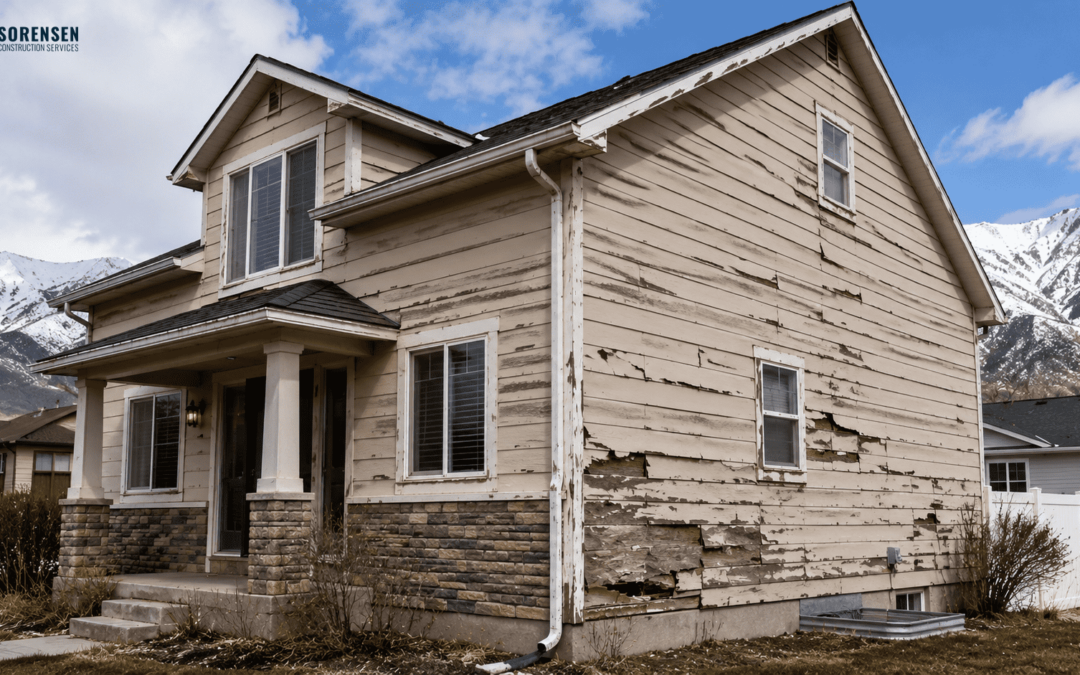
Signs home siding needs replacement in Salt Lake City include warping, buckling, or bubbling panels, cracks, holes, or loose sections, fading beyond normal wear, rising energy bills, and mold, mildew, or water stains near seams. Siding nearing 20 to 40 years old with any of these signs is a strong candidate for full replacement rather than repair.
Key Takeaways
- Warping, buckling, or bubbling siding almost always points to trapped moisture and usually can’t be spot-repaired once it spreads past one panel.
- A climbing energy bill with no change in habits is one of the earliest and most overlooked signs of house siding damage.
- Cracks, holes, and loose panels let water and pests behind the exterior, and Salt Lake City’s freeze-thaw winters widen small gaps fast.
- Mold, mildew, or water stains on siding or interior walls mean moisture has already breached the home’s protective barrier.
- Most siding lasts 20 to 40 years; homes near or past that range with any visible wear are stronger candidates for full replacement than repair.
The pattern along the Wasatch Front is almost always the same: a homeowner notices one small issue, waits a season to see if it worsens, and by the time they call, two or three of the eight signs below have already appeared together. Catching one sign early is usually a simple fix; waiting until several stack up is what turns a repair into a full replacement. The checklist below matches a professional siding inspection, so you can run it on your own home first.
Why Does Salt Lake City’s Climate Wear Out Siding Faster?
Salt Lake City sits in a tough spot for exterior materials. Winters bring repeated freeze-thaw cycles along the Wasatch Front, summers run hot and dry, and spring runoff drives moisture up against foundations and lower wall sections. That combination stresses siding seams, fasteners, and caulk joints in ways that milder, more stable climates don’t. A siding warning sign that might take five years to develop in a coastal city can show up in two or three years here, which is part of why local, climate-specific inspection experience matters more than a generic checklist.
Elevation adds another layer. Homes higher up the bench experience harsher UV exposure and faster temperature swings, which accelerate fading on south- and west-facing walls. Homes near low-lying corridors face more humidity and spring runoff at the foundation level.
8 Warning Signs Home Siding Needs Replacement in Salt Lake City
Run through this list on a walk around your home’s exterior. Any single item is worth a closer look; two or more together usually mean the damage has already spread beneath the surface.
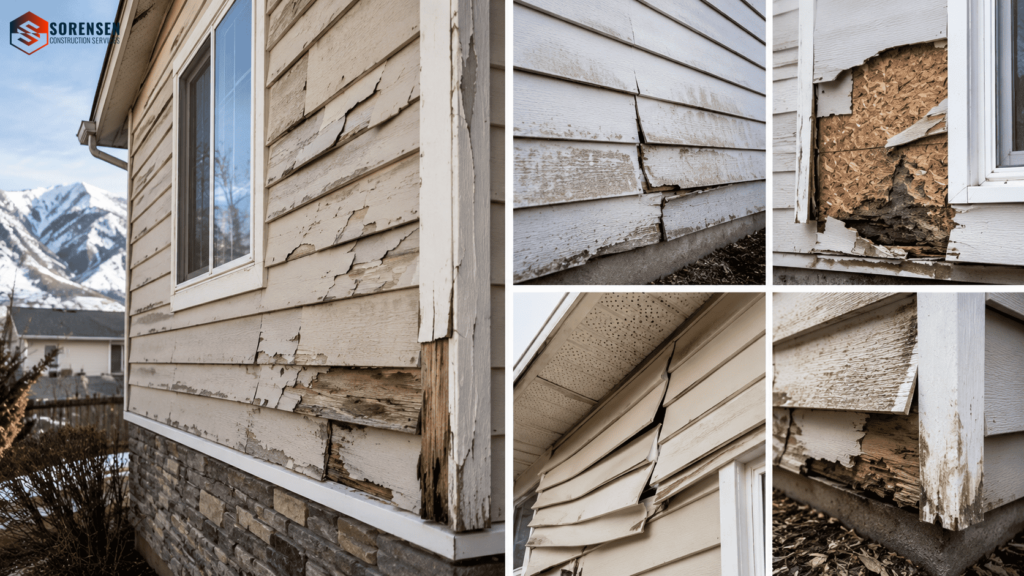
1. Warping, Buckling, or Bubbling Panels
Panels that ripple, pull away from the wall, or no longer sit flush are reacting to trapped moisture or heat damage working underneath. This is one of the most reliable signs of house siding damage because it rarely shows up without a real cause behind it. Press gently on a warped section; if it flexes or feels soft, moisture has likely already reached the sheathing.
2. Fading or Discoloration
Sun exposure and Salt Lake City’s wide seasonal temperature swings break down pigment and protective coatings over time. Fading alone doesn’t always mean replacement, but uneven fading, chalky residue on your hand after touching the siding, or color loss concentrated on one exposure (usually south- or west-facing walls) suggests the material’s protective layer is failing.
3. Cracks, Holes, or Loose Panels
A single hairline crack from hail or debris impact might qualify for a patch repair. But freeze-thaw cycles common along the Wasatch Front widen small cracks every winter, and loose or missing panels give wind-driven rain and pests direct access to the wall assembly. If you can see daylight through a gap or fit a fingernail into a crack, it’s past the point of a cosmetic fix.
4. Rising Energy Bills Without a Change in Usage
This is the sign most homeowners miss because it doesn’t look like a siding problem at all. When siding no longer seals properly, conditioned air leaks out and outdoor temperatures seep in, forcing the HVAC system to run longer to hold a comfortable temperature. If your heating or cooling costs have climbed steadily over a year or two with no change in household habits, failing siding insulation is worth ruling out before assuming it’s a furnace or window issue.
5. Drafty or Uneven Rooms Near Exterior Walls
Related to rising bills, rooms that feel noticeably colder in winter or warmer in summer than the rest of the house often sit along a wall section with compromised siding. Run your hand along interior drywall near an exterior wall on a cold day; a cold spot that tracks with a specific section of siding outside is a strong clue.
6. Mold, Mildew, or Water Stains
Dark streaks or mildew patches on the siding surface, or water stains and peeling paint on interior walls, mean moisture has already breached the home’s protective envelope. This is one of the more urgent signs home siding needs replacement Salt Lake City properties can show, since hidden moisture behind the wall assembly causes far more structural damage than anything visible from the driveway. A musty odor in a room facing prevailing weather is often the first clue before any visible stain appears.
7. Soft or Spongy Sections
Press a finger against the lower portions of exterior walls, especially near grade level, window trim, and downspouts. A soft, spongy, or give-y feel means water has been sitting against or behind the siding long enough to start breaking down the material underneath. This rarely resolves with a patch repair.
8. Siding Approaching or Past Its Expected Lifespan
Most siding materials are built to last 20 to 40 years, depending on the material and how well the original installation was done. A home in the Salt Lake Valley approaching that age range, paired with any of the seven signs above, is a much stronger candidate for full home siding replacement Salt Lake City projects than a newer home with a single isolated issue.
How Can Homeowners Tell If Damage Means Repair or Full Replacement?
Isolated damage in a small section of a home usually qualifies for a targeted repair. Widespread warping, structural buckling, or moisture damage spread across multiple walls calls for full replacement rather than a wait-and-see approach, since patch jobs on failing material rarely hold for long.
| Situation | Recommended Action |
| Single cracked or loose panel | Repair |
| Recurring moisture stains after past fixes | Replacement |
| Siding nearing or past 20–40 year lifespan | Replacement |
| Rising energy bills tied to failing insulation | Replacement |
| Warping or buckling on one isolated section | Repair, with follow-up inspection |
| Warping or buckling across multiple walls | Replacement |
When to Replace Home Siding vs. Schedule a Repair
Timing matters as much as severity. If you’re seeing early signs mild fading, one small crack, a slightly higher bill – a professional inspection now can confirm if a repair will hold, which is almost always cheaper than a full replacement. Waiting until multiple signs stack up removes that option; by then, the wall assembly underneath may already need attention, not just the exterior panels. As a general rule, schedule an inspection at the first sign of trouble rather than after the second or third one appears.
Seasonal timing matters too. Late spring and summer, once the freeze-thaw cycle eases, tend to be the most practical window for exterior work. But an inspection can happen any time of year; no need to wait for winter to pass if you’ve already spotted warning signs.
What Does Full Siding Replacement Typically Involve?
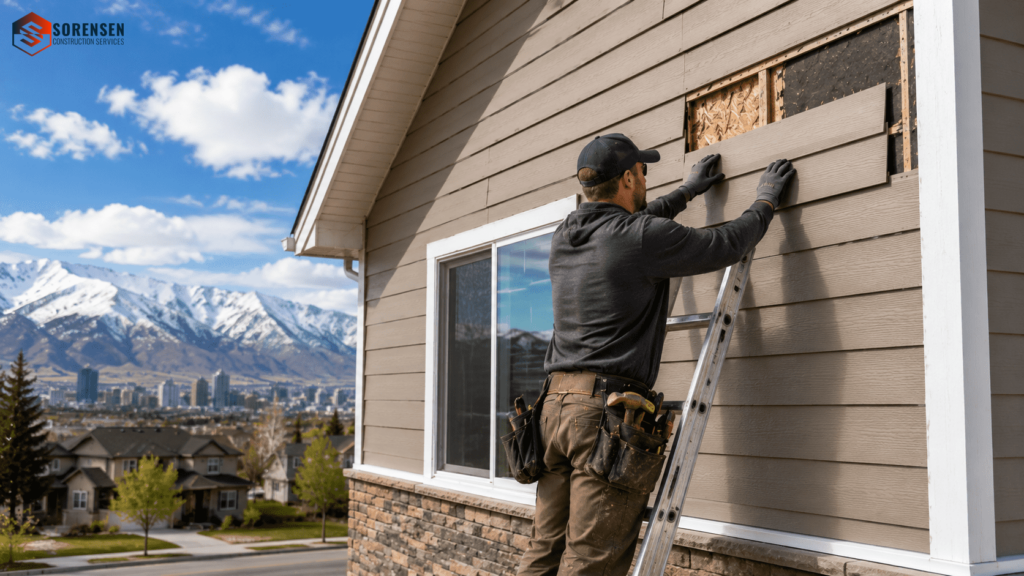
A full home siding replacement Salt Lake City project generally includes removing the old material, inspecting and repairing the sheathing and moisture barrier underneath, and installing new siding with updated flashing and sealing at windows, doors, and corners. Cost varies by material choice, home size, and how much underlying repair the crew finds once the old siding comes off, which is exactly why an in-person evaluation, not a phone estimate, gives homeowners the most accurate picture.
The Bottom Line
Siding rarely fails all at once. It warps, fades, cracks, or lets moisture in one small step at a time, and Salt Lake City’s freeze-thaw winters push that timeline faster than most homeowners expect. Catching one sign early is usually a repair; catching two or three late is usually a full replacement. If your home is showing any of the eight signs above, an in-person evaluation from Sorensen Construction Services will tell you exactly which one you’re dealing with, and what it’ll take to fix it.
FAQ
- What are the earliest signs of siding failure?
Warping, buckling, or bubbling panels are usually the first visible signs, often paired with a gradual rise in energy bills before any obvious cracking appears.
- Can rising energy bills really mean my siding is failing?
Yes. Gaps in siding insulation let conditioned air escape, forcing the HVAC system to run harder and driving up monthly costs.
- How do I know if siding damage needs repair or full replacement?
A single cracked or loose panel usually qualifies for repair; damage spread across multiple walls or paired with moisture stains typically calls for replacement.
- How long does siding usually last before it needs replacing?
Most siding materials last 20 to 40 years, though Salt Lake City’s freeze-thaw winters and dry summers can shorten that window.
- Who can evaluate siding damage in Salt Lake City?
Sorensen Construction Services, based in Park City, Utah, inspects Salt Lake City homes and recommends repair or full replacement based on the extent of the damage.