
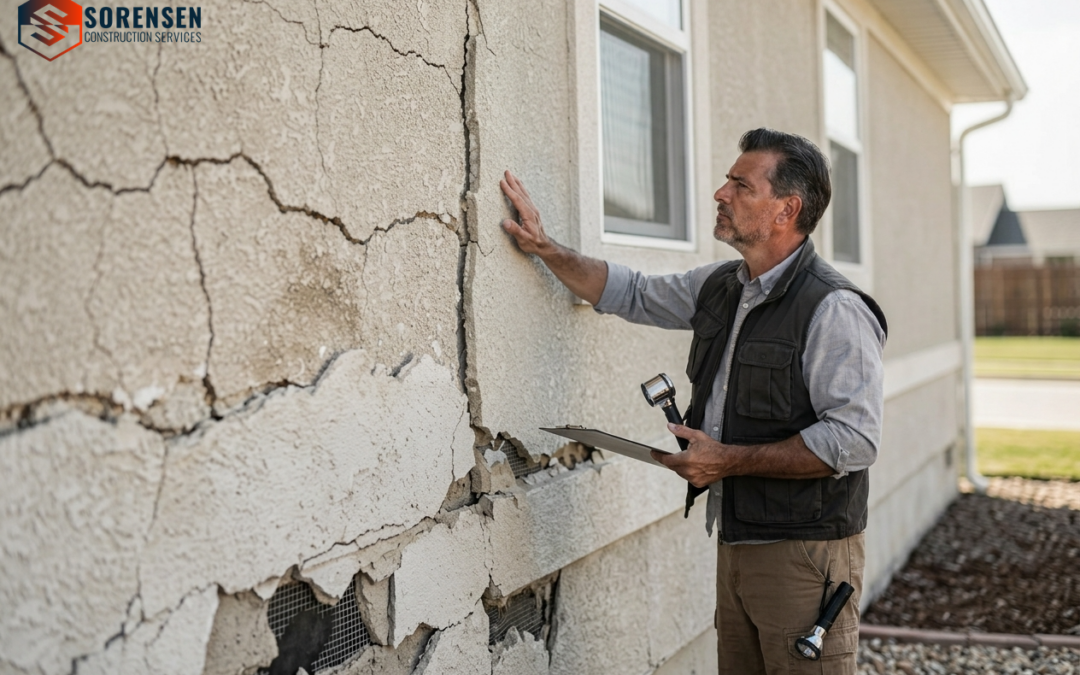
Call a stucco contractor company when you see cracks wider than 1/8 inch, stair-step cracking, bulging, white mineral deposits, or water stains on exterior walls. Each signals moisture behind the finish, and a licensed stucco repair contractor can find the source before freeze-thaw cycles spread the damage.
Stucco contractors across Utah see the same pattern every spring: a finish that looked fine in October comes out of winter with new cracks, dark streaks below rooflines, or soft spots near windows. Sorensen Construction Services has handled exterior repair and remodeling from our Park City base since 1987. This guide explains which warning signs matter, what delay costs, and when to book an inspection.
Key Takeaways
- Cracks over 1/8 inch, stair-step patterns, bulging, efflorescence, and staining are the clearest signals to schedule an inspection.
- Most Utah stucco damage starts at flashing, roof-to-wall junctions, and drainage details, not on open wall surfaces.
- Book a post-winter inspection every spring, plus another before any roof, window, or remodeling project.
- Verify a contractor’s state license before signing. Utah classifies stucco work under S230.
Why Utah’s Climate Demands Proactive Stucco Care
Utah is hard on stucco because the material is rigid, porous, and bonded to a wall that moves. Park City sits near 7,000 feet, and Heber City and Salt Lake County face their own seasonal extremes. Winter delivers snow load and long cold stretches. Spring and fall deliver days that thaw and nights that freeze. Summer adds dry heat and strong high-altitude sun. Stucco absorbs all of it, year after year.
Freeze-thaw cycling widens small cracks
Water enters a crack, freezes, and expands by roughly 9 percent. The ice pries the crack wider, and the next thaw lets in more water. A hairline crack noticed in October can be a visible gap by April. The process is gradual, so homeowners miss it.
High-altitude sun breaks down sealants
Ultraviolet exposure is stronger at elevation. In our experience, the sealant and caulk at windows, doors, and trim dry out and pull away well before the stucco itself fails. The wall looks intact while water slips in at the edges.
Moisture rarely enters through the open wall
Properly applied hard coat stucco sheds water well across large, flat wall areas. Trouble starts at the details: window heads, roof-to-wall junctions, deck connections, and the base of the wall. These are the places where flashing and drainage have to perform, and where they fail first. The visible stain usually appears below the actual entry point, so the mark and the real problem are often several feet apart.
Top Signs You Need to Call a Utah Stucco Contractor
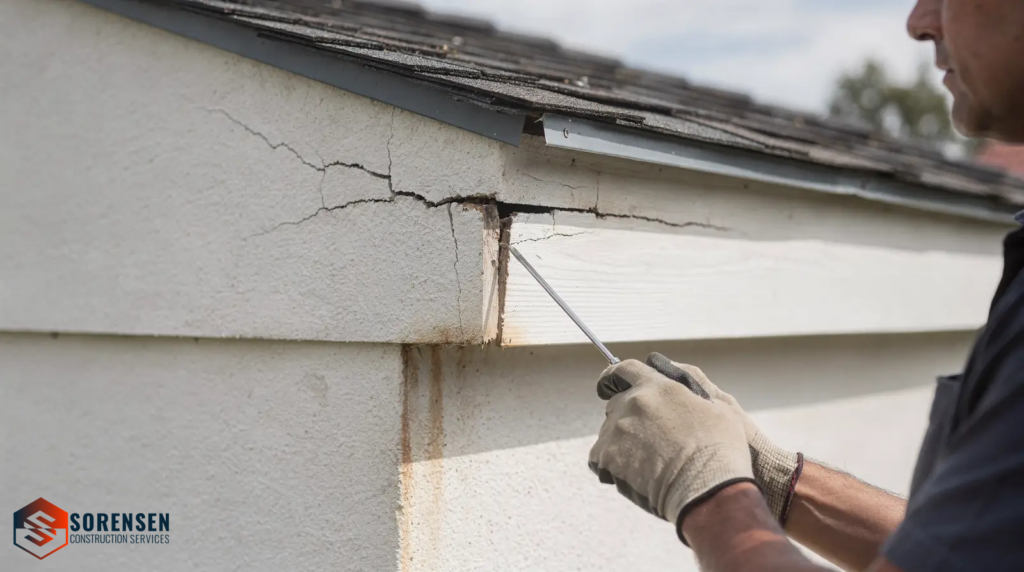
Cosmetic marks and genuine defects look alike from the driveway. These signs separate them.
- Stair-step or widening cracks over 1/8 inch. That width is roughly four stacked credit cards. Hairline cracks under 1/16 inch are usually cosmetic. Cracks that grow, run diagonally from window corners, or step along joints point to movement or moisture.
- Efflorescence. White, chalky deposits mean water is traveling through the wall and carrying mineral salts to the surface. The powder is harmless. The water path behind it is not.
- Bulging or soft spots. Stucco that sounds hollow when tapped or feels spongy has often lost its bond or sits over damaged sheathing.
- Water staining. Dark streaks below windows, rooflines, or kickout flashing show that runoff is entering the wall or being directed into it.
- Bubbling or peeling paint near the base. Moisture is wicking up from grade or splashing back from poorly drained landscaping.
- Gaps at trim, flashing, or roof lines. Open joints give water a direct path behind the finish.
A simple monitoring routine
Walk the exterior twice a year with a pencil and a phone. Mark the ends of any crack with a dated tick and photograph it. If the crack passes the mark within a month, call a stucco repair contractor. Avoid filling cracks with caulk as a first response. Sealing over a wet wall traps the moisture inside and hides the evidence an inspector needs.
The Risks of Delaying Professional Stucco Repairs
A stucco wall is a layered assembly: finish coats, metal lath, a weather-resistive barrier, sheathing, framing, and insulation. Water that gets past the finish does not simply dry out. It sits against the sheathing, where it feeds rot, mold, and corrosion of the lath. By the time a homeowner sees a bulge or an interior stain, the damage has usually been developing for a full season or more. Following stucco repair tips for Utah homes can help homeowners recognize potential problems and understand when professional repairs are needed.
Framing and substrate decay
Wood sheathing is the first component to soften, followed by framing members and insulation. Substrate decay also weakens the bond between stucco and wall, which is why bulging often shows up after the damage is already established. Once structural members are involved, the project stops being a stucco repair and becomes a carpentry and waterproofing repair that happens to include stucco.
How repair scope escalates
The scope of work tends to move through three stages the longer a problem runs:
- Surface repair: crack routing, sealant replacement, patching, and recoating. This is the least invasive and least expensive outcome.
- Localized rebuild: removing a section of stucco, replacing the barrier and flashing, repairing sheathing, then re-lathing and re-coating the area.
- Full tear-off: removing stucco across multiple walls when moisture is widespread or recurring, then rebuilding the entire system.
The jump between stages is where costs climb. A tear-off also means matching color and texture across a full elevation, which is far more complicated than blending a small patch.
Why surface patches rarely fix a moisture problem
A patch over a wet substrate hides the symptom while the cause keeps working. The crack returns, often in the same spot, and the next repair is larger. A competent stucco contractor tests moisture content in the wall before recommending any repair, using meters and probes rather than guesses. That diagnosis is what separates a lasting fix from a repeat visit.
Ideal Timing: When to Schedule Your Stucco Inspection
Inspections work best when tied to the Utah calendar, not to the moment a problem becomes obvious.
Post-winter assessment
Schedule an inspection once snow has cleared the foundation line, typically in late spring at higher elevations like Park City and earlier along the Wasatch Front. Winter causes the freeze-thaw damage, and spring reveals it. Catching it then leaves the whole dry season for repairs.
Early fall check before the first hard freeze
Fall is the second-best window. Sealant failures and small cracks found in September or early October can be repaired before water gets into them for the winter. Skipping it hands freeze-thaw cycling a head start.
Before roof, window, or remodeling work
Any project that touches the building envelope is a reason to inspect first. New roofing, window replacement, deck attachments, and solar mounts all create penetrations or alter water flow at the exact junctions where stucco fails. Fixing the wall before the project, or coordinating both together, costs less than opening a finished wall later.
After storms, leaks, or a home purchase
Heavy wind-driven rain, an interior leak, or a recent home purchase also justify a professional look. Buyers in particular should treat stucco as a line item for inspection, since hidden moisture does not appear in a standard walkthrough.
How to Choose the Right Stucco Contractor Company in Utah
Good hiring comes down to licensing, diagnostic skill, and mountain experience.
Confirm the license first
Utah licenses stucco work under the S230 classification, which covers masonry, siding, stucco, glass, and rain gutters, as defined in Utah Administrative Code R156-55a-301. Ask for the license number and confirm its status on the state licensing lookup before you sign anything. Do not rely on a card or a number the contractor hands you.
Ask how the contractor diagnoses before repairing
Strong stucco contractors can explain, in plain language, how they will find the cause of a problem. Listen for moisture testing, flashing inspection, and a plan to open the wall where needed. Be cautious of anyone who quotes a patch without looking behind the surface.
Look for high-altitude and freeze-thaw experience
A stucco company Utah homeowners can trust should have direct experience with snow load, freeze-thaw cycling, and elevation-driven UV exposure. Ask for examples of projects in Park City, Heber City, or similar climates, not generic application methods borrowed from warmer regions.
It’s also helpful to understand the differences between stucco and concrete when evaluating exterior materials and choosing the right option for your property.
Get a written scope that covers the substrate
A good estimate names what happens to the barrier, flashing, and sheathing, not only the finish coat. It should also explain how new work will blend with existing texture and color.
Choose a team that handles both repair and installation
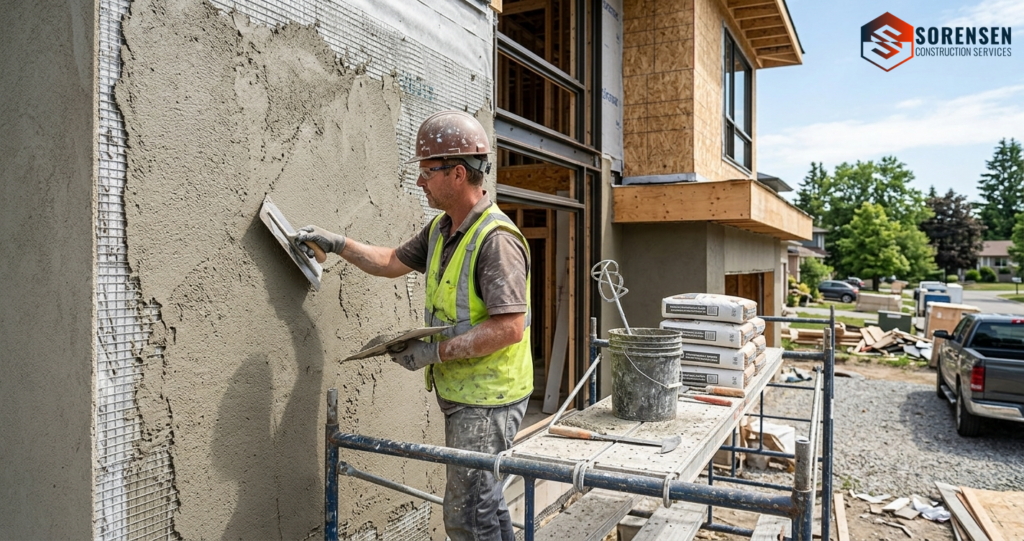
A stucco installation contractor who also handles repair understands how walls fail, which improves new work. Sorensen Construction Services inspects flashing, soffits, fascias, and roof-to-wall connections as one connected system rather than treating stucco as an isolated surface. Our team serves homeowners, property managers, and commercial owners across Park City, Heber City, and Salt Lake County, and every recommendation is built around the condition of the specific property.
If you have noticed any of the warning signs above, request a stucco inspection from Sorensen Construction Services before the next freeze-thaw season begins.
Conclusion
Stucco rarely fails without warning. Cracks that widen, stains that return, and surfaces that sound hollow all point to the same cause: water where it should not be. Utah’s freeze-thaw cycles reward homeowners who act early and punish those who wait. Schedule a spring inspection, track changes through the year, and choose a licensed contractor who diagnoses the cause before touching the surface.
If your stucco needs professional attention, explore our stucco repair and installation services to address existing damage and protect your home’s exterior. Your wall, framing, and budget all benefit.
FAQ
- When should I call a stucco repair contractor?
Call as soon as you see cracks wider than 1/8 inch, stair-step cracking, bulging, efflorescence, or water stains. These signs usually mean moisture has reached the wall assembly behind the stucco.
- Are cracks in stucco normal in Utah?
Hairline cracks under 1/16 inch are common and usually cosmetic. Wider, growing, or stair-step cracks should be evaluated by a professional.
- How often should stucco be inspected in Utah?
Inspect stucco at least once a year, ideally in spring after snowmelt, and add a fall check before the first hard freeze if you have known problem areas.
- What license does a stucco contractor need in Utah?
Utah stucco contractors work under the S230 classification issued by the Division of Occupational and Professional Licensing. Verify active status on the state lookup before hiring.
- What is the difference between a stucco repair contractor and a stucco installation contractor?
A repair contractor diagnoses and fixes damage on existing stucco, while an installation contractor builds new systems. The best stucco contractors do both, because understanding failures improves new construction.