
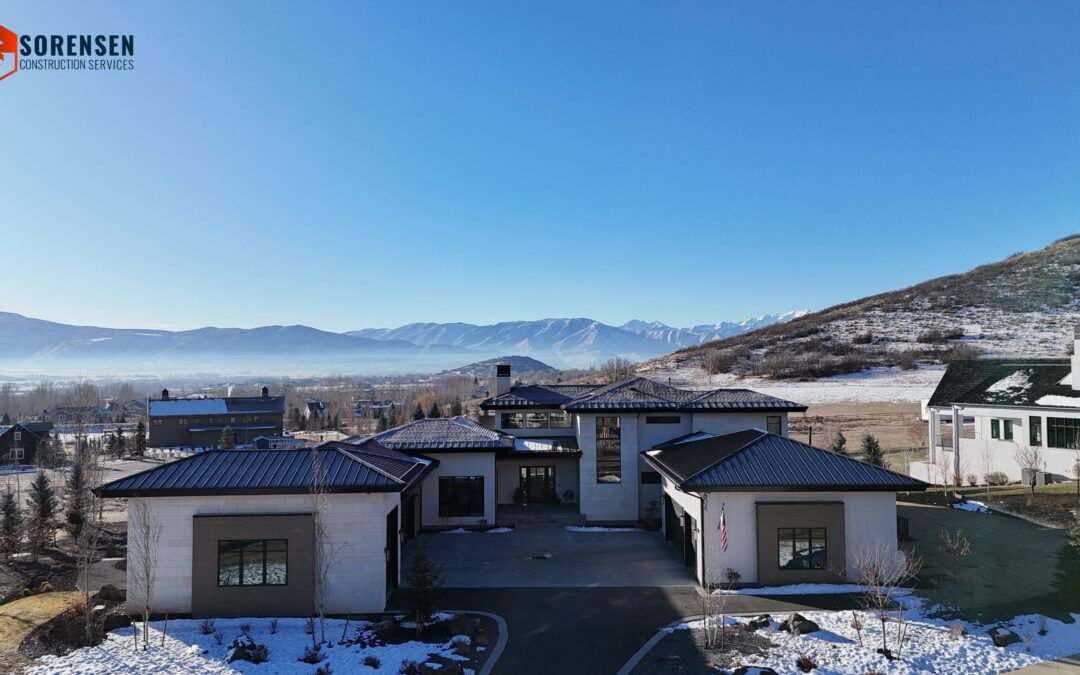
The best exterior materials Park City luxury homes can use are natural stone at the base, architectural stucco or premium engineered siding on the walls, and steel or timber as controlled accents. Layering materials this way resists freeze-thaw cycles, high UV, and sliding snow while keeping mountain home exterior design clean and warm.
Park City exterior remodeling and new custom builds share the same problem: the climate punishes every seam, fastener, and finish. This guide compares the mountain home exterior materials Park City architects and builders specify most, shows where each one performs, and explains how to combine them. If you are interviewing Park City siding contractors, treat it as a checklist.
Key Takeaways
- Put the toughest material, natural stone, where snow slides, splashes, and piles up.
- Treat stucco and siding as systems. Drainage, flashing, and joint layout decide how long they last.
- Use steel and timber as accents, because both age fastest on exposed south and west faces.
- Park City limits how many materials can appear on a wall and prohibits several siding types, so confirm the rules before you specify.
What Park City’s Climate Demands From Luxury Home Exterior Materials
Park City homes sit high, with many neighborhoods between roughly 6,800 and 8,400 feet. Three forces separate a durable exterior from a handsome one that fails within a decade.
Freeze-thaw cycling. Water that enters a porous material expands about 9 percent as it freezes. Spring and fall temperature swings repeat that cycle again and again, widening hairline cracks, lifting poorly bonded finishes, and loosening joints.
High UV exposure. Thin air means strong sun. It fades dark finishes, chalks lower-grade coatings, and dries out unprotected wood, especially on south and west elevations.
Snow load and sliding snow. Beyond the weight on the roof, snow slides off, ice forms at eaves, and plowed snow stacks against lower walls for months. City planning guidance for Park City’s Base Area specifically calls for building bases that resist damage from sliding snow and falling ice.
In our experience on mountain exterior projects, the cladding itself is rarely the first thing to fail. Problems start at transitions: where stone meets stucco, where siding meets a deck ledger, where a steel panel meets a window head. Good material selection starts with good detailing at those points.
The Best Exterior Materials Park City Homes Can Rely On
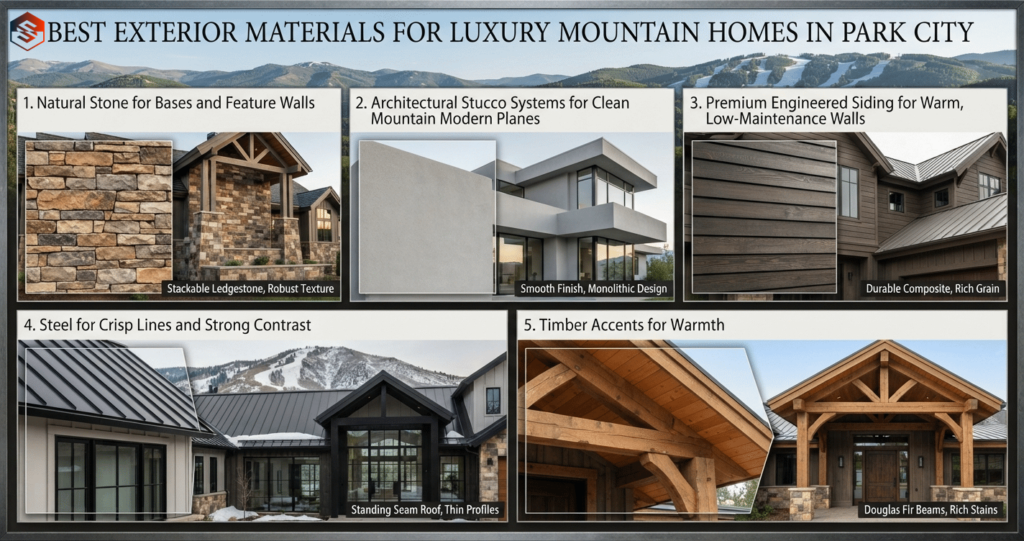
Each material below earns its place for a different job. None is the best option everywhere on the house.
1. Natural Stone for Bases and Feature Walls
Quarried natural stone is the benchmark among luxury home exterior materials. Dense stone absorbs little water, shrugs off impact, and gains character as it weathers. It belongs at the base of the home, around entries, and on chimneys and feature walls, anywhere snow and ice do the most damage.
Detail matters more than the stone itself. Sills, caps, and ledges need slope and sealed joints so they do not hold snow, and the wall behind the stone needs a drainage path and flashing. Manufactured stone is not a shortcut here. Planning documents summarizing Park City’s Land Management Code list cultured and simulated stone among prohibited siding materials, so real stone is the safe specification.
For homeowners planning a broader masonry project, Sorensen also provides stone, brick, and masonry exterior services that can help bring different exterior materials together.
2. Architectural Stucco Systems for Clean Mountain Modern Planes
Modern architectural stucco delivers the seamless planes and crisp edges that define mountain modern architecture. Cement-based and insulated finish systems both work at altitude when they are built as drainage assemblies, with a water-resistive barrier, a drainage path, proper flashing, and control joints placed at window corners and floor lines.
Stucco rarely fails because of the stucco. It fails because water gets in at windows, rooflines, and deck connections and cannot get out. Deep charcoals and bronzes look striking, but they magnify thermal movement and fading, so specify a finish engineered for dark colors and confirm the warranty at elevation.
If an existing stucco surface has cracks, moisture damage, or deteriorating finishes, professional stucco repair and installation can help address the underlying problems before they affect more of the exterior.
3. Premium Engineered Siding for Warm, Low-Maintenance Walls
For owners asking about the best siding for mountain homes, factory-finished fiber cement and engineered wood lead the shortlist. Fiber cement is non-combustible and dimensionally stable, which helps in wildfire-prone areas. Engineered wood offers a warmer grain with less upkeep than natural wood. Factory finishes usually hold color longer than field-applied paint.
Snow is the installation variable. Lower courses sit buried against snowbanks all winter, so keep siding well above grade and pair it with a stone or masonry base instead of running it to the ground. Follow manufacturer clearances at roof, deck, and grade lines exactly, since many warranties depend on them.
The right material is only part of the decision. Proper exterior siding installation and replacement also requires attention to moisture barriers, flashing, transitions, and manufacturer installation requirements.
4. Steel for Crisp Lines and Strong Contrast
Pre-finished steel and weathering steel bring thin profiles, strength, and non-combustibility. They shine on fascia, entry canopies, chimney surrounds, and accent walls. Specify the panel profile carefully, because large flat steel panels can show waviness, called oil-canning. Weathering steel also needs a drip and runoff plan, since early rust runoff can stain stone, concrete, and decks below. For any roof use, choose non-reflective finishes. Park City’s code summary restricts reflective and untreated metal roofing, except copper.
5. Timber Accents for Warmth
Timber softens stone and steel, and it works best as an accent at soffits, entry portals, garage doors, and beams under deep overhangs. Protected timber lasts. Exposed timber on a south-facing wall needs recoating far more often than the same species under an eave on the north side. Choose durable species or thermally modified wood, plan the finish schedule at the design stage, and check fire ratings for any timber in wildland-urban interface zones, where wood shingles are prohibited.
| Material | Best Use | Main Watch-Out |
| Natural stone | Bases, entries, chimneys | Flat ledges that hold snow |
| Architectural stucco | Large wall planes | Water entry at transitions |
| Engineered siding | Main wall fields | Burial against snowbanks |
| Steel | Fascia, canopies, accents | Oil-canning and runoff stains |
| Timber | Soffits, doors, beams | Sun exposure and recoating |
Park City Rules That Shape Material Selection
Material choices in Park City are not purely aesthetic. City planning documents summarizing the Land Management Code allow up to three different siding materials per building and no more than three on any one wall. Ornamental siding is capped at 25 percent of a facade. Vinyl and plastic siding, cultured stone, thick shake shingles, and asphalt siding are prohibited, and aluminum siding needs Planning Director approval.
Wildfire and snow add further layers. The Park City Building Department publishes its design criteria, snow load resources, and wildland-urban interface guidance, and every project team should start there: Park City Building Department plan review resources. Summit County projects follow different standards, and many subdivisions add architectural review committee approval on top. Confirm all three before you order material.
The three-material limit works in a designer’s favor. Restraint is what makes Park City home exterior design read as intentional.
Material Combinations That Work in Mountain Home Exterior Design
Stone, stucco, and steel. The cleanest mountain modern formula. Stone grounds the base, stucco forms the walls, and steel defines fascia and canopies. Three materials, well within the code limit.
Stone, engineered siding, and timber. Warmer and more textural. Use siding for the main walls, stone at the base and chimney, and timber at entries and under overhangs where it stays protected.
Stucco, stone, and minimal timber. The right choice for ridge-top homes with higher fire exposure. Non-combustible walls do the heavy lifting, and timber is limited to small, protected accents.
Whatever the pairing, place material changes at inside corners or a deliberate reveal, never mid-plane. Clean transitions look better and are far easier to flash and seal.
Planning Park City Exterior Remodeling With the Right Contractor
Park City exterior remodeling adds a variable that new construction does not: what is hiding behind the existing cladding. Before specifying anything, have the walls inspected for moisture damage, failed flashing, and rot at windows and decks. Re-cladding over wet or poorly flashed walls hides the problem for a winter or two, then amplifies it.
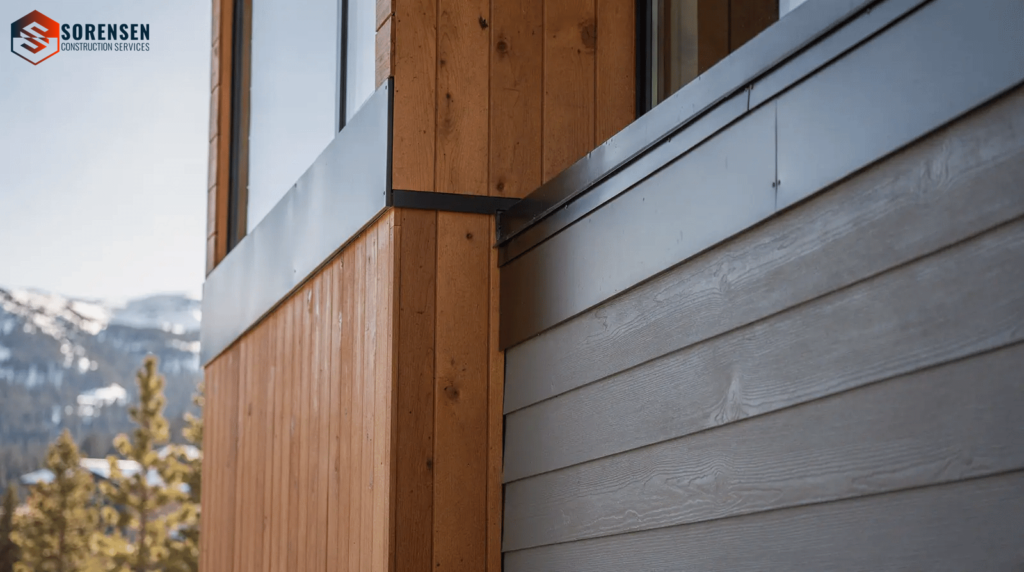
Exterior work also runs on a short seasonal clock at altitude, so schedule material lead times, HOA approvals, and permits well ahead of the building window. When you interview Park City siding contractors, ask:
- Which wall assemblies have you built at elevation, and can I see local projects?
- How do you handle drainage planes, flashing, and control joints at transitions?
- Which materials are approved under Park City’s code and my HOA’s guidelines?
- What does your warranty cover in freeze-thaw conditions?
Sorensen Construction Services installs stucco, stone, siding, and full exterior remodels across Utah. If you want a second set of eyes on your material palette, we are glad to review it. Explore our full exterior services in Park City to see how we can help with your home’s exterior project.
Frequently Asked Questions
- What are the best exterior materials for Park City homes?
Natural stone at the base with architectural stucco or premium engineered siding on the walls, plus steel or timber accents, performs best against freeze-thaw, UV, and snow. Combining materials this way is more durable than using a single cladding.
- What is the best siding for mountain homes?
Factory-finished fiber cement is the most common choice because it is stable, non-combustible, and low maintenance. Engineered wood suits owners who want warmer grain, and both pair well with a stone base.
- Does Park City restrict exterior materials?
Yes. City planning documents summarizing the Land Management Code limit materials to three per wall and prohibit vinyl siding and cultured stone. Always confirm current rules with the city or county and your HOA.
- How do I choose Park City siding contractors for a luxury home?
Look for documented mountain-climate experience with drainage-plane stucco, stone, and engineered siding, plus local references and a warranty that addresses freeze-thaw. Ask to see completed projects at similar elevation.
- How long do luxury exterior materials last in Park City?
Stone and steel typically last the longest with minimal upkeep, while stucco and siding last as long as their drainage and flashing details hold. Timber needs the most frequent recoating.