

Schedule retail center exterior repairs before winter if you see cracked or warped siding, failed sealant joints, bubbling finishes, damp wall bases, or damaged fascia and soffits. Each sign points to water already finding a way into the wall system, and repeated freezing widens that path with every storm.
Key Takeaways
- Freeze-thaw damage needs moisture, so the signs that matter most are the ones showing water getting in.
- Eight visible signs separate urgent commercial exterior repairs from work that can wait until spring.
- Triage in three tiers: safety and active leaks first, sealing and drainage second, cosmetic work last.
- Dated photos of today’s conditions support budgeting, tenant communication, and insurance conversations.
Most property managers do not miss exterior problems through carelessness. They miss them because a hairline crack or a dry sealant joint looks harmless in October. On commercial walk-throughs, the repairs that cost the most usually began as something small and easy to defer.
This guide covers the signs worth acting on, how to rank them, and how to schedule retail building maintenance around tenants and holiday traffic. It is written for managers, facility teams, and owners of strip centers, plazas, and standalone retail buildings in Utah and the surrounding Mountain West.
Why Winter Is Hard on Retail Exteriors
Freeze-thaw damage needs two ingredients: moisture inside the material and temperatures that swing across 32°F. Water expands roughly 9 percent when it freezes, but expansion is only part of the story. Building Science Corporation’s analysis of freeze-thaw damage in masonry walls makes the point that damage depends on how saturated a material is when the freeze arrives, not on cold alone.
That changes how you inspect. You cannot control the weather, but you can control how much water reaches your walls. Every sign below is, at its core, a moisture pathway.
Retail properties carry extra exposure. Long storefront runs, shared walls, and loading areas mean one defect can touch several leases, and repairs must compete with holiday traffic for access.
Utah’s climate raises the stakes. Strong sun can thaw a wall surface in the afternoon that refreezes after sunset, and that daily swing repeats on many winter days. A wall that looks dry in November can be saturated by March. Our guide to freeze-thaw siding damage explains the mechanism in more depth.
The same moisture concerns apply to masonry and veneer systems. Property managers evaluating stone and brick exterior systems should also watch for cracks, deteriorating joints, and signs of water penetration before freezing temperatures arrive.
Eight Signs of Exterior Wall Damage to Fix Before Winter
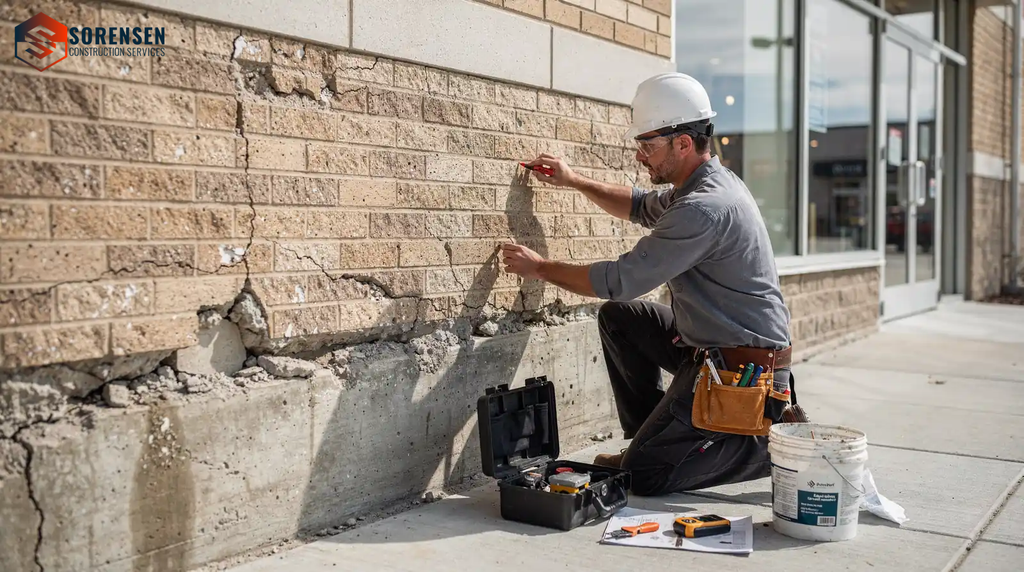
1. Cracks That Reopen After Patching
A crack that returns after patching is rarely a surface problem. Water is usually cycling in and out behind the finish, or the wall is moving at a joint that was never built to flex. Patching over it repeats the cycle. On stucco and EIFS, check the corners of windows and doors and the control joints, where stress concentrates. Have a contractor probe the area for soft or damp substrate before anything gets sealed. Our EIFS maintenance guide for commercial properties covers what that inspection involves.
For cracks involving stucco, proper evaluation and repairs are important to prevent moisture from reaching the underlying wall system. Professional stucco repair and installation can address damaged areas and help restore the exterior’s protective surface.
2. Warped, Bowed, or Loose Siding Panels
Warping and loose panels mean fasteners have failed, the panel has absorbed moisture, or thermal movement has outpaced the attachment. Loose panels are also a safety issue above storefront walkways. Press along panel edges and listen for rattling on a windy day. Put anything loose in your urgent tier, because snow and ice load will finish what the fasteners started.
Depending on the material and extent of the damage, exterior siding services can help determine whether the affected panels need localized repairs or complete replacement.
3. Open, Brittle, or Missing Sealant Joints
Sealant is among the least expensive components on the building and among the first to fail. Look for joints that have pulled from the substrate, cracked, shrunk, or turned chalky around windows, doors, penetrations, and panel seams. A failed joint can admit water for months before an interior stain appears, which makes sealant inspection one of the best returns on a pre-winter walk.
4. Bubbling, Peeling, or Chalking Finishes
Blistered paint and lifting coatings often mean liquid water or vapor is trapped behind the surface. Fading and chalking matter less on their own, yet they show that the coating has lost its protective film. A finish that cannot release moisture holds it, and a wall that holds water takes the full force of the next freeze.
5. Dampness, Staining, or White Residue at Wall Bases
Dark staining, persistent dampness, or white mineral deposits near the bottom of a wall point to water wicking up from grade, splashing from a failed downspout, or running down from a defect above. Lower walls absorb the worst of snowmelt, plowed snow, and de-icing salt. If the same spot is damp during dry weather, treat the source as active.
6. Damaged Fascia, Soffits, and Gutters
Fascia, soffits, and gutters move roof water away from the building. When a gutter sags, a soffit panel goes missing, or fascia shows rot or separation, water ends up where it should not, often behind the cladding. Ice dams can also form at the eave. A single failed section can quietly feed a wall for an entire season, which is why commercial soffit and fascia repairs deserve early attention.
For more extensive deterioration, professional soffit and fascia installation and repair can help restore these components and protect vulnerable roof edges from moisture intrusion.
7. Drainage That Sends Water Toward the Building
Downspouts that discharge at the wall, scuppers that dump onto cladding, and grading that slopes toward the foundation turn every thaw into a leak test. That same water freezes on walkways, creating slip hazards at entrances. On a dry day, run a hose through suspect downspouts and watch where the water lands. A defect that only shows after heavy rain can seem minor in dry weather, yet it keeps working in the background.
8. Interior Clues and Tenant Complaints Near Exterior Walls
Ceiling stains, musty odors, bubbling interior paint, and drafts along exterior walls often appear inside before the damage is obvious outside. Treat tenant complaints as inspection data. Log each one with a date and location, then compare the log with your exterior notes. When an interior stain and an exterior defect line up, you have probably found an active leak path.
How to Prioritize Retail Center Exterior Repairs Before Snow
Not every finding needs a crew tomorrow. Sorting by risk keeps spending predictable and puts safety first.
- Urgent now: Active leaks, loose or falling panels, damaged fascia or gutters, and ice-prone drainage at entrances.
- Schedule this fall: Failed sealant, open flashing, recurring cracks, bubbling finishes, and damp wall bases.
- Plan for spring: Fading, chalking, and cosmetic wear that does not admit water.
A written scope with photos for each tier lets ownership approve work in order of risk instead of reacting to the loudest complaint.
Winter Building Maintenance: Timing and Tenant Coordination
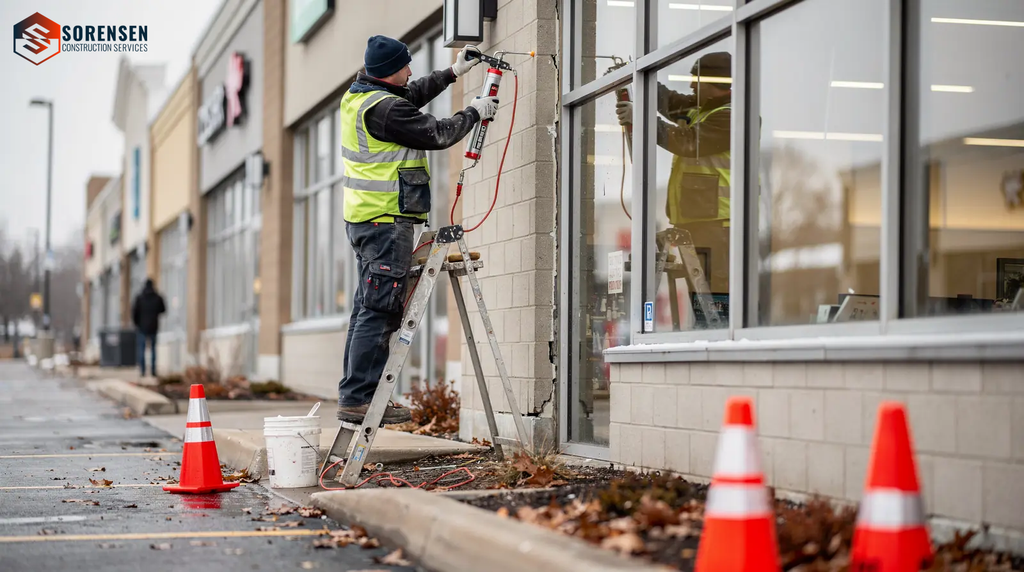
Materials set the schedule. Many sealants, coatings, and patching compounds carry minimum application temperatures, so a cold snap can close the window for certain repairs. Check each product data sheet before committing to dates. If hard freezes have already arrived, structural and safety work can usually continue while moisture-sensitive finish work waits for the next warm stretch.
Tenants shape the rest. Sequence noisy or disruptive work away from the holiday peak, give tenants written notice early, request early-morning or after-hours access where possible, and keep entrances and accessible routes open. Avoid staging lifts or scaffolding in front of storefronts during peak sales hours.
Document as you go. Dated photos of each defect, before and after, give ownership a baseline for capital planning and a record if an insurer, lender, or tenant asks what was known and when. Many property policies treat long-term wear and deferred maintenance differently from sudden damage, so confirm with your broker how that applies to your coverage.
A Pre-Winter Walk-Through Checklist
Walk the building in daylight, ideally after rain, with a camera and a notepad. Cover every elevation, not only the storefront side.
- Wall cladding on every elevation, including loading areas and rear service corridors
- Sealant around windows, doors, signage mounts, and penetrations
- Fascia, soffits, gutters, and downspouts
- Flashing and roof edges visible from grade
- Grade, drainage, and ice-prone walking surfaces at entrances
- Interior ceilings and walls below exterior walls
Rear elevations deserve extra attention. Back walls get less visibility and less maintenance, yet they often show the first drainage and sealant failures on a retail center.
When to Call a Commercial Exterior Contractor
Call a contractor when a defect repeats after patching, when moisture reaches the substrate, or when you cannot tell how far a stain extends. Sorensen Construction Services evaluates existing siding, stucco, and exterior wall systems to determine if repair or replacement makes sense for the property’s condition. If stucco is involved, our guide to when to call a stucco contractor company in Utah explains what to look for.
We provide a free, no-obligation estimate for siding and exterior work, and our team handles commercial building exterior repair from localized fixes through full replacement.
Act on the Signs Before the Snow
Retail center exterior repairs work best when they follow the evidence: cracks that reopen, panels that loosen, sealant that fails, and water that pools where it should not. Fix the urgent items first, document everything, and schedule the rest around tenants and holiday traffic. That turns a potential winter emergency into planned retail building maintenance with a predictable budget.
Frequently Asked Questions
1. When should property managers schedule retail center exterior repairs?
Schedule them in early fall, before the first hard freeze and well ahead of holiday traffic. If freezing temperatures have already arrived, start with safety and active-leak repairs and stage the rest for the next warm window.
2. What causes exterior wall damage in winter?
Water enters through cracks, failed sealant, or poor drainage, then expands when it freezes. Repeated freeze-thaw cycles widen those openings and let more moisture in each time.
3. What does winter building maintenance include for a retail center?
It includes inspecting cladding, sealant joints, fascia, soffits, gutters, and drainage, then repairing defects in order of risk. Dated photos of each condition become the record for budgeting and tenant communication.
4. Can commercial exterior repairs be done in cold weather?
Some can, but many sealants and coatings require minimum temperatures, so the product data sheet decides. Safety and structural repairs generally proceed, while finish work may wait for a warmer window.
5. How often should a retail center exterior be inspected?
Inspect at least twice a year, in fall before winter and in spring after the thaw, plus after any major storm. Fall findings drive winter planning, and spring findings catch what the freeze left behind.